
From the July/Aug 2026 issue — a back issue. Read the current issue or browse the archive.
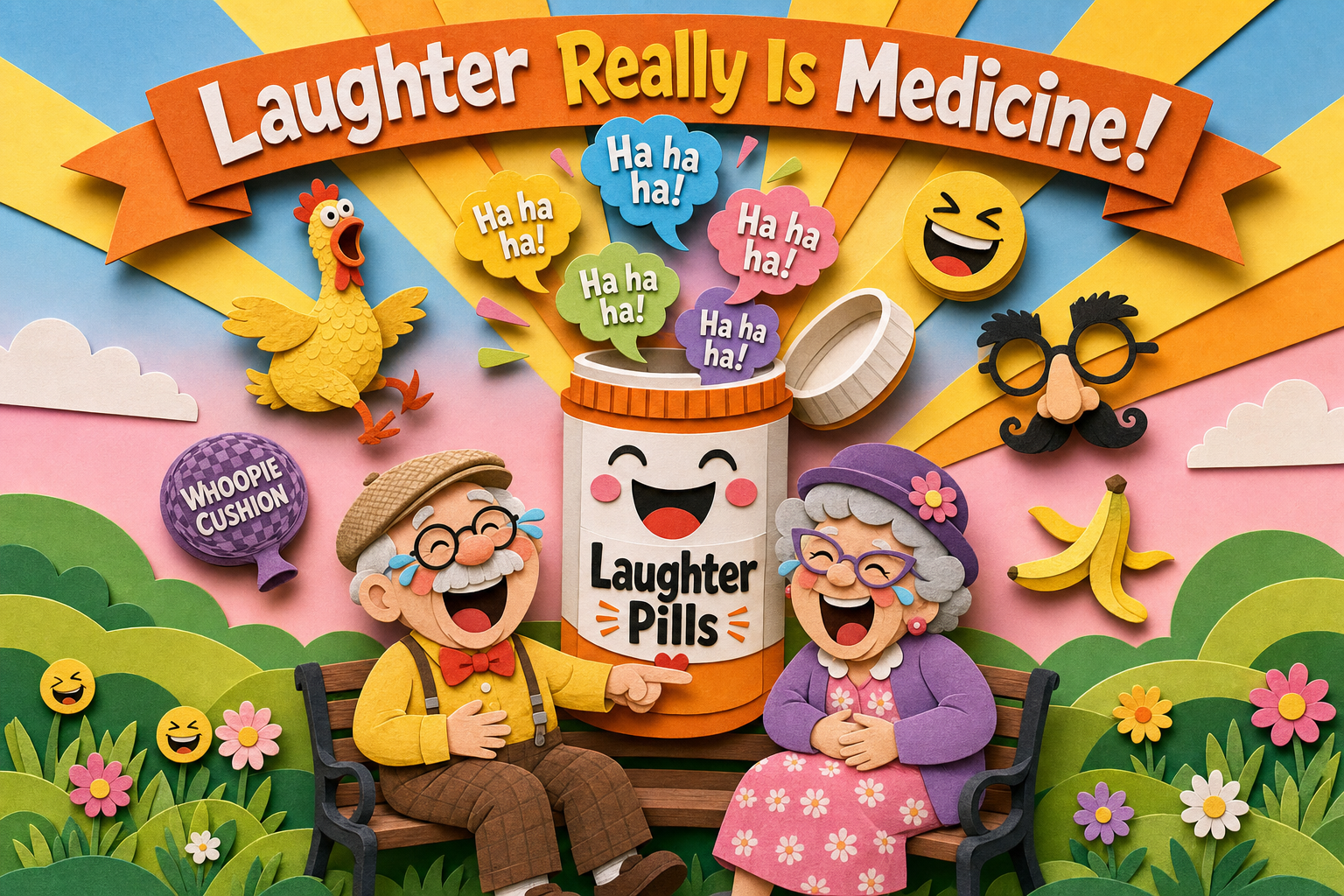
Laughter Really Is Medicine
Why Humor Heals
Laughter releases endorphins, lowers stress hormones, and builds social bonds, showing why finding humor in daily life is a powerful prescription for health.
By James Morris · July/Aug 2026
“"The beauty of laughing at yourself is that it takes the sting out of life’s little embarrassments."”
If laughter is the best medicine, then someone forgot to tell my doctor because he keeps prescribing me pills that cost more than my first car. But let’s not dwell on that. Instead, let’s talk about why humor really does heal—without the risk of side effects like nausea, dizziness, or the existential dread that comes with reading the fine print on your prescriptions.
First of all, laughter is free (a rare thing these days, unless you count unsolicited advice from your neighbor). It’s also surprisingly effective. Science says it lowers stress, boosts immunity, and even reduces pain. That’s right—cackling at a silly joke might not fix your arthritis, but it’ll make you forget about it for a few glorious seconds. And honestly, when was the last time your kale smoothie did that?
The Science of Giggles
Let’s get serious for a moment—well, as serious as we can get while talking about snorts and belly laughs. When you laugh, your brain releases endorphins, those magical little chemicals that make you feel as happy as a retiree booking a cruise during off-season. Laughter also lowers cortisol, the stress hormone responsible for making you feel like you’re stuck in line at the DMV… forever.
Even your heart gets in on the action. Laughing increases blood flow, which is great for your ticker. It’s like cardio, but without the sweating or the Lycra. So technically, telling jokes should count as exercise. Go ahead—cancel that gym membership and subscribe to Netflix comedy specials instead. You’re welcome.
Why Seniors Are the Funniest People Alive
Let’s face it: seniors are some of the funniest folks around. Why? Because by the time you’ve lived through decades of bad decisions, questionable fashion trends, and the horror that was 1970s wallpaper, you’ve earned the right to laugh at absolutely everything.
Remember that time you put your phone in the fridge and your sandwich in the microwave? Hilarious. How about when you called your grandkid by the dog’s name for the third time this week? Comedy gold. Aging is basically one long sitcom, and you’re the star. Bask in the glory, my friend.
And don’t forget about the art of sarcasm—the native language of anyone over 60. Need an example? The next time someone asks, “What are you doing today?” reply with, “Oh, just skydiving and bungee jumping. You know, the usual.” It’s dry, it’s sassy, and it’ll leave them wondering if you’re serious. Spoiler: you’re not.
Bad Jokes, Good Vibes
Let’s talk about the fine art of the bad joke. Yes, I’m looking at you, Uncle Bob, with your endless supply of dad jokes that make everyone roll their eyes. But here’s the thing: bad jokes are actually good for you. They’re like vitamins for the soul, except they don’t taste like chalk.
For example:
Why don’t skeletons fight each other? Because they don’t have the guts!
See? That groan you just let out? That’s the sound of your stress levels dropping. You’re welcome. Now, go share that joke with someone else, and watch them try not to laugh. It’s contagious, like yawning, but way more fun.
The Healing Power of Laughing at Yourself
One of life’s greatest joys is the ability to laugh at yourself. (And if you can’t, don’t worry—your family is more than happy to do it for you.) Tripped over your own shoelaces? That’s slapstick comedy in real life. Accidentally sent a text to your boss that was meant for your spouse? Congratulations, you’re living in a sitcom.
The beauty of laughing at yourself is that it takes the sting out of life’s little embarrassments. Plus, it gives you great stories to tell. “Remember that time I wore two different shoes to church?” is way more entertaining than, “Let me show you my vacation photos.”
Humor: The Glue of Social Connection
They say laughter brings people together, and they’re not wrong. (Who are “they,” anyway? Probably a bunch of scientists in lab coats with clipboards, but I digress.) Sharing a laugh with a friend strengthens your bond, whether you’re reminiscing about the good old days or giggling over something absurd, like the fact that avocado toast is now considered a luxury item.
Even strangers can connect through laughter. Ever exchanged a knowing look with someone after a waiter dropped a tray of dishes? That moment of shared humor is like a little hug for your soul. And let’s be honest—laughing at life’s mishaps is way more fun than crying over them.
Laughter Yoga: Yes, It’s a Thing
If you’re ready to take your laughter game to the next level, consider laughter yoga. It’s exactly what it sounds like—stretching, breathing exercises, and a whole lot of forced giggling. Sure, you might feel ridiculous at first, but that’s kind of the point. Fake laughter often turns into real laughter, and before you know it, you’re cackling like a hyena at… well, nothing. It’s weird. It’s wonderful. It’s worth a try.
Closing Thoughts (and a Final Terrible Joke)
So, there you have it. Laughter really is medicine, and the best part is you don’t need a prescription. Whether you’re cracking up at a goofy joke, reminiscing about past shenanigans, or just enjoying the absurdity of life, laughter has the power to heal, connect, and brighten even the gloomiest days.
Now, before I go, I’ll leave you with one last joke:
Why can’t you give Elsa a balloon? Because she’ll let it go.
Go ahead, groan—it’s good for your health. And remember: life is too short to be serious all the time. Laugh often, laugh loudly, and laugh at yourself. After all, if you don’t, someone else will.
Prefer the printed page? Flip through the July/Aug 2026 issue — this story starts on page 29.
Keep reading

Wellness · Well-Being Series
Gentle Routines That Restore Mind, Body, and Spirit
Simple, daily self-care habits can boost mental clarity, physical health, and emotional well-being, helping older adults flourish at every stage of life.
James Morris · page 15

Wellness · Well-Being Series
The Science of Social Health
Scientific research shows that strong social connections enhance longevity, boost immunity, and protect mental sharpness, proving that meaningful relationships are vital medicine for seniors.
James Morris · page 12
Creativity
Learning Something New to Stay Connected and Engaged
Taking up new hobbies, exploring digital tools, and joining group classes keeps brain health strong while fostering community and personal growth.
James Morris · page 26